
Best On-Premises CRM 2026

Data sovereignty has become increasingly important for businesses in 2026. The rise of AI means organisations are handling and processing more data than ever, while businesses in regulated industries and those operating across different countries may need to keep data within specific geographic or legal boundaries. At the same time, businesses want greater control over their infrastructure, AI, security and customer data.
As a result, on-premises and self-hosted CRMs are becoming increasingly sought after, offering significant advantages over a traditional cloud-only approach.
Rather than having your CRM hosted entirely by a software provider, as is common with popular solutions such as Salesforce and HubSpot, an on-premises CRM is installed on infrastructure controlled by your organisation or a chosen hosting provider. This gives you greater control over where your CRM and customer data are hosted, how the environment is managed and when updates are applied.
In this guide, we compare some of the leading on-premises CRM platforms available in 2026, including SugarCRM, EspoCRM, SuiteCRM, Microsoft Dynamics 365 and Odoo, looking at customisation, integrations, deployment options and which types of organisations each platform is best suited to.
Best on-premises CRMs at a glance
1. SugarCRM (Sugar Enterprise): Best overall
- Best for: Businesses looking for a flexible, secure CRM, especially organisations with complex processes, integration requirements or strict data security and sovereignty requirements.
- Customisation: Highly customisable, allowing businesses to tailor the CRM around their own processes and workflows.
- Integrations: Extensive API and integration capabilities make it suitable for connecting CRM with other business systems.
- Security & Control: On-premises deployment gives businesses greater control over their CRM environment and data.
- Support: Commercial support and professional implementation services are available, with specialist third-party hosting providers/partners able to manage the infrastructure and technical maintenance for you.
2. EspoCRM
- Best for: Open-source and self-hosted CRM — particularly suited to businesses that prioritise flexibility and control.
- Customisation: Highly customisable and can be adapted to suit specific business requirements.
- Integrations: REST API capabilities make it flexible for connecting with other systems.
- Security & Control: Self-hosting gives businesses greater control over where their CRM and data are hosted.
- Support: Commercial support and professional services are available, while specialist third-party providers/partners can host and manage the CRM for you, removing the burden of managing your own servers and infrastructure.
3. SuiteCRM
- Best for: Open-source CRM — a suitable option for organisations looking for a broad, self-hosted CRM platform.
- Customisation: Flexible and can be customised to suit different business requirements.
- Integrations: API capabilities allow it to connect with other business systems.
- Security & control: Self-hosting provides greater control over the CRM environment and data.
- Support: Free community versions may rely on community forums rather than formal SLAs, so businesses needing dedicated support should factor this into their decision.
4. Microsoft Dynamics 365
- Best for: Businesses already heavily invested in Microsoft’s wider ecosystem.
- Customisation: Extensive customisation options, but this can make the platform more complex to implement and manage.
- Integrations: Strong integration with Microsoft products and business applications.
- Security & control: Offers a range of security and deployment options depending on the product.
- Support: Microsoft’s extensive support ecosystem is available, although the level of support depends on the plan and partner arrangements.
5. Odoo
- Best for: Businesses wanting a basic CRM alongside ERP and wider business management tools.
- Customisation: Flexible and modular, although its broad range of applications can make implementations more complex.
- Integrations: Connects CRM with accounting, inventory, sales and other business functions.
- Security & control: Self-hosting can give businesses greater control over their data and infrastructure, but also increases responsibility for managing the environment.
- Support: Support is available through Odoo and its partner network, depending on the edition and service arrangement.
Our shortlist
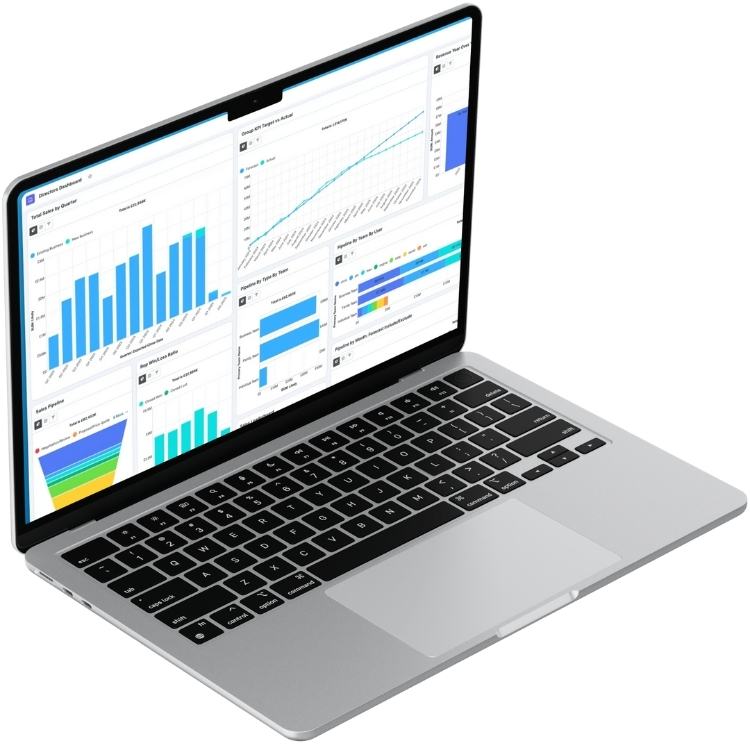
SugarCRM (Sugar Enterprise)
SugarCRM is our first choice for organisations that need more than a standard, out-of-the-box CRM.
Sugar Enterprise supports on-premises deployment, allowing organisations to decide where and how their CRM environment is managed. Sugar describes its on-premises offering as providing control over the technology stack, while retaining the flexibility to customise the platform around individual business requirements.
That flexibility is particularly useful for businesses with complex sales processes, multiple teams or a requirement to connect CRM data with other business systems.
Sugar also supports integrations with modern and legacy systems, including ERP platforms, making it suitable for organisations that want their CRM to sit at the centre of a wider technology ecosystem.
Why choose SugarCRM for on-premises CRM?
- Highly configurable CRM platform
- On-premises deployment through Sugar Enterprise
- Extensive API and integration capabilities
- Suitable for complex business processes
- Greater control over the CRM environment
- Supports integrations with ERP and other business systems
- Established enterprise CRM platform
- Can be customised without being limited to a predefined CRM structure
EspoCRM
EspoCRM is an increasingly compelling option for organisations that want complete control over their CRM environment without committing to a large enterprise platform.
EspoCRM is open source and can be installed on your own server, allowing your organisation to retain control over its CRM data and infrastructure. The platform supports custom fields, layouts, workflows and dashboards, while its open architecture and REST API allow for deeper customisation and integration.
Unlike some proprietary CRM platforms, EspoCRM doesn’t require per-user licensing for its core self-hosted software. It can run on common web server and database technologies, including Apache, Nginx, IIS, MySQL, MariaDB and PostgreSQL.
enable have implemented hundreds of on-premise CRM systems!
At enable.services, we work with organisations with complex processes and security requirements. If you’re looking for an on-premises or self-hosted CRM due to data sovereignty requirements or strict industry regulations, get in touch to explore your options. We’d be happy to help.