
What is an API-First CRM?
Skip to:
All CRMs are different, but not all CRMs are built for your business.
What do we mean by that? If you’re using a CRM that is not API-first, you’ve likely already encountered limitations. These often show up as feature caps, pricing barriers that force you into expensive add-ons, and a long list of out-of-the-box functionality that looks impressive, but goes largely unused.
Traditional, out-of-the-box CRMs are typically designed to serve the widest possible audience. While this can make them quick to deploy, it also means they are rigid by nature. As soon as your processes evolve or you need deeper integrations, custom workflows, or tailored data models, these platforms can become restrictive and costly. Thousands of businesses blame these restrictions on the CRM itself and decide to switch to a similar competitor, without realising that these limitations exist across most of the major players in the industry!
Examples of out-of-the-box (Non API-First) CRMs
While powerful in their own right, the following CRMs are often built around predefined functionality rather than API-first flexibility:
- HubSpot – Easy to get started, but advanced features and integrations are locked behind higher tiers, and customisation options can be limited.
- Salesforce – Highly capable, but complex and expensive to tailor, often requiring proprietary tooling and specialist development.
- Zoho CRM – Feature-rich out-of-the-box, but less flexible when it comes to deep, custom integrations at scale.
- Pipedrive – Well suited to simple sales pipelines, but restrictive for businesses with complex workflows or data requirements.
As businesses demand more flexibility, scalability, and integration from their software, the way CRMs are built has become just as important as the features they offer. One of the most important shifts in modern CRM architecture is the move toward API-first design.
In this article, we’ll explain what an API-first CRM is, why this approach is shaping the future of CRM platforms, and why SugarCRM and EspoCRM are excellent examples of API-first systems.
What does API-First mean?
An API-first CRM is designed with its Application Programming Interface as a core part of the product, not an add-on. Instead of building the user interface first and exposing limited APIs later, an API-first CRM is architected so that all core functionality such as data access, workflows, automation, and integrations are available through the API.
In non-technical terms, an API-first CRM is a customer management system designed to easily connect with other apps from the start.
In practice, API-first CRMs allow organisations to:
- Integrate seamlessly with existing systems
- Build custom applications and portals
- Automate complex workflows across platforms
- Avoid brittle or unsupported customisations
The API is not just a connector, it’s the foundation.
Why API-First CRMs are the future
Modern businesses rarely operate in isolation. CRMs must connect to marketing platforms, finance systems, support tools, data warehouses, and custom applications. API-first CRMs are designed for this reality, and grow with you instead of growing against you.
Key advantages include:
Scalability
As your business grows, your CRM must handle increasing data volumes, users, and integrations. API-first CRMs scale cleanly without forcing costly re-platforming.
Flexibility
Whether you’re adding new tools, changing workflows, or launching new digital products, an API-first CRM adapts without needing invasive changes.
Future-Proofing
Technology stacks evolve quickly. An API-first CRM ensures you’re not locked into today’s interfaces or workflows and can adopt new tools as they emerge.
Better Data Control
With full API access, your data remains accessible and portable, supporting better reporting, analytics, and governance.
The Best API-First CRMs
SugarCRM
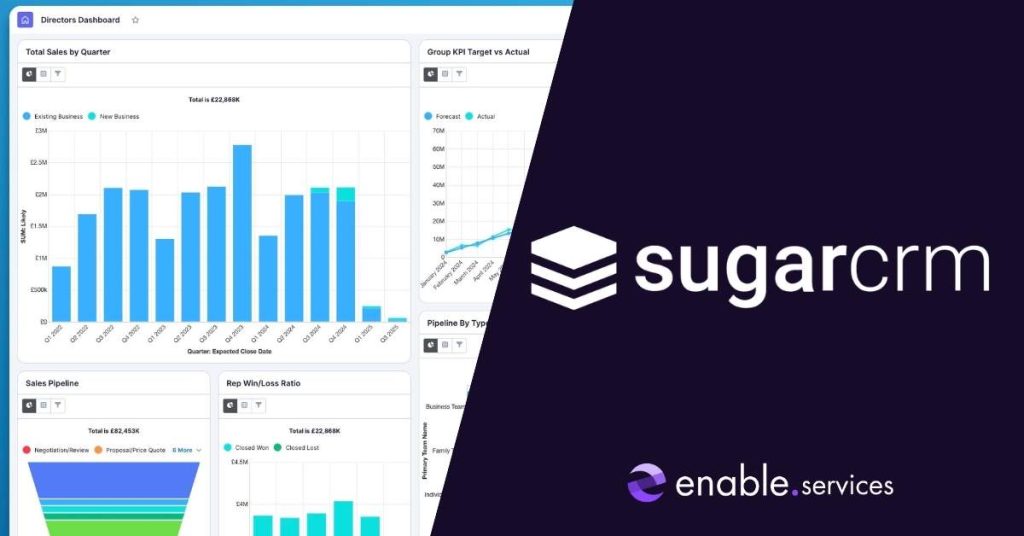
SugarCRM is a strong example of an enterprise-ready, API-first CRM. Its comprehensive REST APIs provide access to core modules, relationships, workflows, and custom objects, making it well suited to complex, integrated environments.
SugarCRM enables organisations to:
- Integrate deeply with ERP, marketing, and support systems
- Build custom front-end experiences and portals
- Support advanced, enterprise-level workflows
- Maintain flexibility as business requirements change
This makes SugarCRM an excellent choice for organisations that need both power and adaptability.
EspoCRM
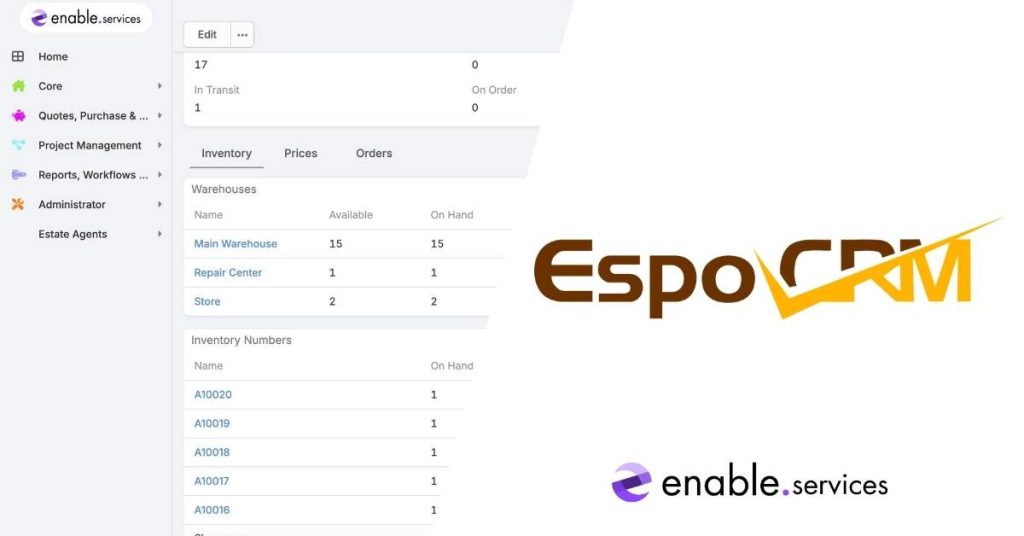
EspoCRM demonstrates how an API-first design can also be lightweight and cost-effective. Built with extensibility in mind, EspoCRM exposes its functionality through a clean REST API, making it ideal for bespoke CRM implementations.
EspoCRM is particularly well suited for:
- Custom CRM builds
- Industry-specific solutions
- SMEs and growing businesses
- Organisations seeking flexibility without vendor lock-in
Its open architecture makes it easy to tailor the CRM to specific processes while keeping integrations simple and sustainable.
Why enable.services focuses exclusively on API-First CRMs

At enable.services, we work exclusively with API-first CRM platforms because we believe this approach represents the future of CRM.
Our clients need systems that:
- Integrate cleanly with their wider technology stack
- Support long-term growth and change
- Avoid rigid limitations and fragile customisations
Our team of in-house developers builds on APIs to support our customers as they grow, ensuring their CRM is not just a tool, but a scalable platform that evolves with their business.
An API-first CRM provides the flexibility, control, and longevity that modern organisations need. Platforms like SugarCRM and EspoCRM show what’s possible when integration and extensibility are built in from day one.
At enable.services, we choose API-first CRMs because they’re designed for growth—today and in the future.